
Therapeutic exercise and physiotherapy in Berlin-Schöneberg
Whether therapeutic exercise, manual therapy, or lymphatic drainage: We will determine which approach is appropriate based on your prescription, clinical findings, and goals.
Treatments on this page
- As a team, we are certified in occupational therapy
- Physiotherapy with breathing therapy
- Physiotherapy according to Bobath
- Manual therapy
- CHATTANOOGA® INTELECT® NEO
- Manual lymphatic drainage and Complex Physiotherapy Decongestion Therapy (MLD, KPE)
- Classic massage therapy
- Fascial techniques
- Mud Therapy and Heat Therapies
- Kinesiology taping
- Cryotherapy
- Craniomandibular Dysfunction (CMD)
- Craniosacral therapy (levels I and II)
- Proprioceptive Neuromuscular Facilitation (PNF) in basic and foundational courses
- Complex Shoulder Complaint Profile
- Therapeutic options for gait disturbances in neurological patients
- Coach back school
- Infant massage
- Pelvic floor exercises
- Headache and migraine therapy
- Maitland concept
- Physiotherapy treatment and counseling for ADHD syndrome
- Aqua - Wellness trainer
Collaboration between patient and therapist
Physiotherapy Berlin Schöneberg
As a team, we are certified in occupational therapy.
In medical gymnastics, we select exercises that are suitable for your prescription and your findings. You can train your flexibility, strength, and coordination, for example after injuries or with restricted movements. Depending on the goal, it is also about maintaining existing abilities and learning exercises for everyday life.


Physical therapy with breathing therapy
In breathing therapy, the therapist utilizes the holistic effect of breathing. We work with simple movements, stretches, pressure points, and vocal exercises to enhance the perception and flow of the breathing movement.
Bobath Physiotherapy
Bobath-based therapeutic exercise is indicated for certain neurological conditions. The team, further trained for this purpose, works with you on movement patterns that are important for your daily life. Tactile stimuli and guided movements may be used in this process. Which exercises are suitable depends on the individual assessment.


Manual therapy
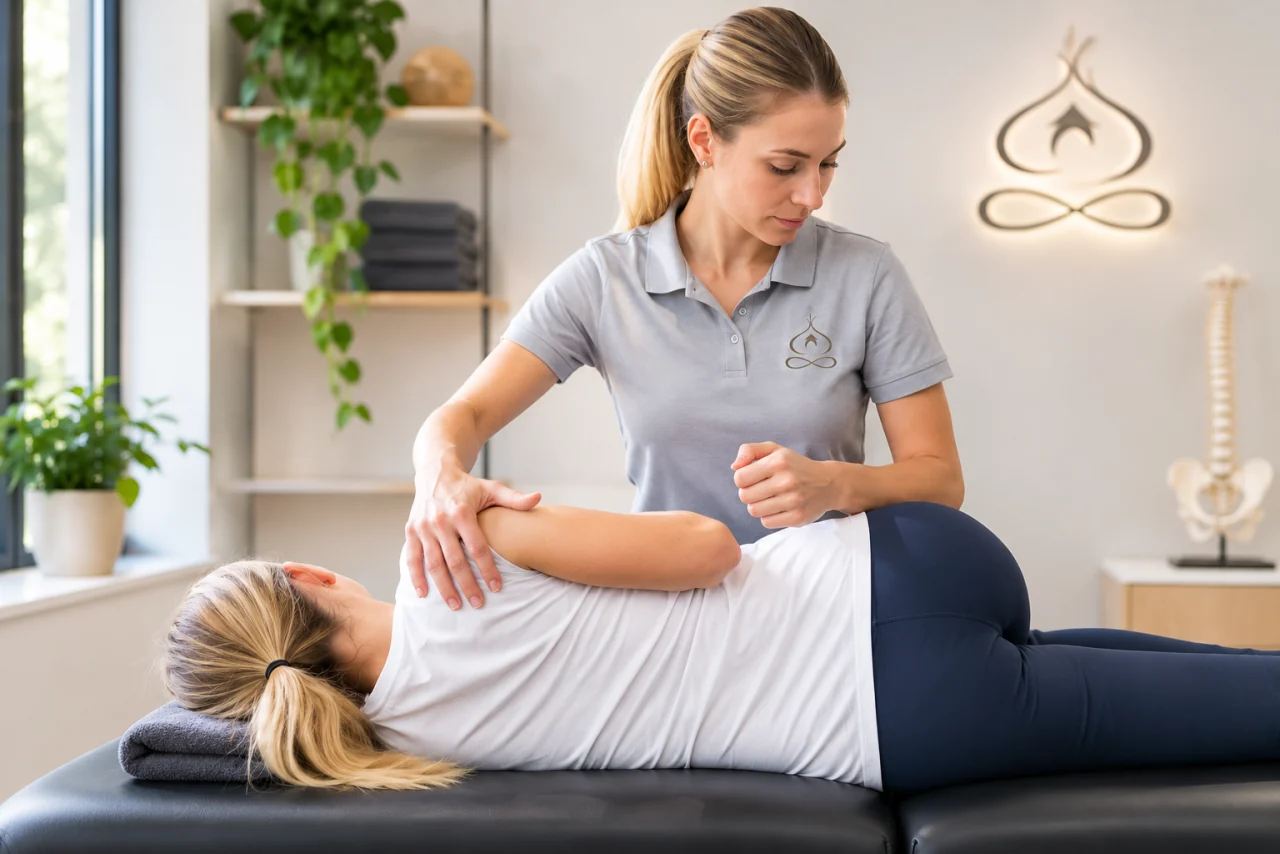
During manual therapy, specially trained physiotherapists specifically examine functional disorders in joints, muscles, and the spine. Depending on the findings, mobilizing hand techniques and active exercises can be used.
Chattanooga Intellect Neo
The team at Synergie Physiotherapie, Elena Bogdan’s clinic in Berlin-Schöneberg, uses a Chattanooga electrotherapy device.
Ultrasound therapy: Wear and tear (osteoarthritis) in the joints and the spine, tennis elbow and golfer's elbow - pain of various kinds, e.g., in rheumatoid arthritis - sprains, bruises, strains, contusions, swelling, spasms, muscle stiffness (myosgelosis), muscle shortening - tendon irritation - tissue adhesions
Electrotherapy: - Pain therapy - Muscle atrophy - Paralysis - Edema treatment - Rheumatic diseases - Soft tissue disorders


Manual lymphatic drainage and Complex Physiotherapy Decongestion Therapy (MLD, KPE)
Complex physical decongestion therapy combines multiple measures for the treatment of oedema. These may include manual lymphatic drainage, compression, skin care, and decongestive exercises. The specific components and type of compression used are determined by the prescription and clinical findings.
Classical massage therapy
The muscles and the body envelope can be treated through classical massage with appropriate dosing. Treatment is performed by our trained staff using their hands. If a functional disorder is identified, treatment can also be continued in another area of physiotherapy. Connective tissue massage is the manual influence on the body envelope, particularly the skin, subcutaneous tissue, fascia, and muscle. It is treated through mechanical stimuli and stretching, utilizing a specific pulling and pushing technique, as well as a stroking technique.
During segment massage, the therapist uses certain techniques on the skin, subcutaneous tissue and musculature. Which application is suitable depends on the findings.


Fascial techniques
Essentially, there are three types of fascia: the superficial fascia of the skin, the deep fascia of the musculoskeletal system, and the visceral fascia. Fascial techniques are used to identify and treat disturbances in this tissue.
Mud Therapy and Heat Therapies
Heat can be applied in several ways, such as a fango pack, hot air or a hot towel roll. We discuss which option may suit your treatment.


Kinesiology taping
During kinesiotaping, elastic adhesive strips are applied to the skin. The technique can complement treatment depending on the findings. Whether it is worthwhile, we will discuss it on a case-by-case basis.
Cryotherapy
Cryotherapy involves applying cold to a specific area, for example with ice. We discuss whether it suits your treatment based on your assessment findings and treatment goal.


Craniomandibular Dysfunction (CMD)
In a craniomandibular dysfunction, pain, limited jaw movement, or joint noises may occur. The causes can vary. After evaluation, physiotherapy measures can help improve the function of the jaw and relieve symptoms.
Craniosacral therapy (levels I and II)
In this complementary method, gentle manual techniques are used, among other things, on the head and the spine. Ask about the treatment goal and the evidence for your symptoms before using it.


Proprioceptive Neuromuscular Facilitation (PNF) in basic and foundational courses
PNF stands for Proprioceptive Neuromuscular Facilitation and is applied alongside neurological approaches across nearly all areas of practice, with both adults and children. PNF is a three-dimensional physiotherapeutic treatment method that enables us to treat clinical conditions in which movement patterns are impaired due to illness, injury, surgery, or degeneration. The goal is to restore and enhance mobility.
Complex Shoulder Complaint Profile
The shoulder is one of the most complex orthopaedic structures in the human body. Pain may stem from structural or functional causes and, with prolonged duration, can also lead to psychological complaints. Therefore, a thorough assessment and a well-trained therapist are decisive for treatment.

Therapeutic options for gait disturbances in neurological patients
The goals of the gait school are the creation or maintenance of a physiological, harmonious gait pattern and the prevention of postures that lead to overloading. Avoidance movements following injuries and operations occur spontaneously and represent atypical movement patterns in the course of recovery that can lead to pain. A change in gait movements during the therapeutic process constitutes an intervention into the body's flow and must be carried out through close communication between the patient and the physiotherapist at Physiotherapy Berlin Schöneberg.
Trainer back school
Targeted training aims primarily to enhance body awareness, ensuring that in daily life an upright posture and gentle or supportive movements are maintained. Consequently, the back school includes not only exercises to strengthen the back or core musculature, but also relaxation techniques designed to maintain the body's health in the long term.


Infant massage
We will demonstrate gentle touches and massage techniques that parents can try when interacting with their child. A child's reaction to touch is individual. For persistent complaints such as digestive issues, please consult your pediatrician's practice.
Pelvic floor exercises
The pelvic floor is the muscle that forms the floor of the pelvic cavity and works in opposition to the diaphragm. In addition, the back muscles and abdominal muscles influence the pelvic floor. Like any other muscle, the pelvic floor can be trained with the help of exercises.


Headache and migraine therapy
Migraine can significantly impact daily life and is often particularly painful. With specialized physiotherapeutic techniques and interventions, it is possible to manage these symptoms effectively.
Maitland concept
This concerns the assessment, evaluation, and treatment of functional disorders in the neuromusculoskeletal system, primarily using passive movements. The Maitland concept includes a specific way of thinking and acting when assessing and treating functional disorders in peripheral joints and the spine.


Physiotherapy treatment and counseling for ADHD syndrome
Problems in one or more areas can also occur during normal development. Children and adolescents with ADHD differ from healthy peers in terms of the extent and severity of these problems. Due to ADHD symptoms, many affected individuals face significant difficulties in important life areas such as family and school, as well as in interacting with peers.
Aqua - Wellness trainer
For muscle strengthening, improved circulation, and generally as a positive influence on the whole body, swimming is suitable with regular training. The pressure under water contributes to improved breathing, thereby increasing respiratory stability. Additionally, a social environment is created, which accompanies this therapeutic opportunity with great joy.

Have questions about our services or what to expect? Call us to discuss the next steps.
Before the registration
If you already have a prescription for a homeopathic remedy, please bring it when requesting an appointment. Ask us if you are unsure which documents or test results you should bring.
General information about physiotherapy is available from the Institute for Quality and Efficiency in Health Care (IQWiG, in German).
Information for your first appointmentYour Appointment in Berlin-Schöneberg
Hohenstaufenstraße 32 · 10779 Berlin